15、
在要求天才的产生之前,应该先要求可以使天才生长的民众。
──譬如想有乔木,想看好花,一定要有好土;没有土,便没有花木了;所以土实在较花木还重要。——《未有天才之前》一九二六年
Thursday, 10 April 2014

Monday, 7 April 2014


Sunday, 6 April 2014
tessellated skin, Bug house

File:Eden Project geodesic domes panorama.jpg
From Wikipedia, the free encyclopedia


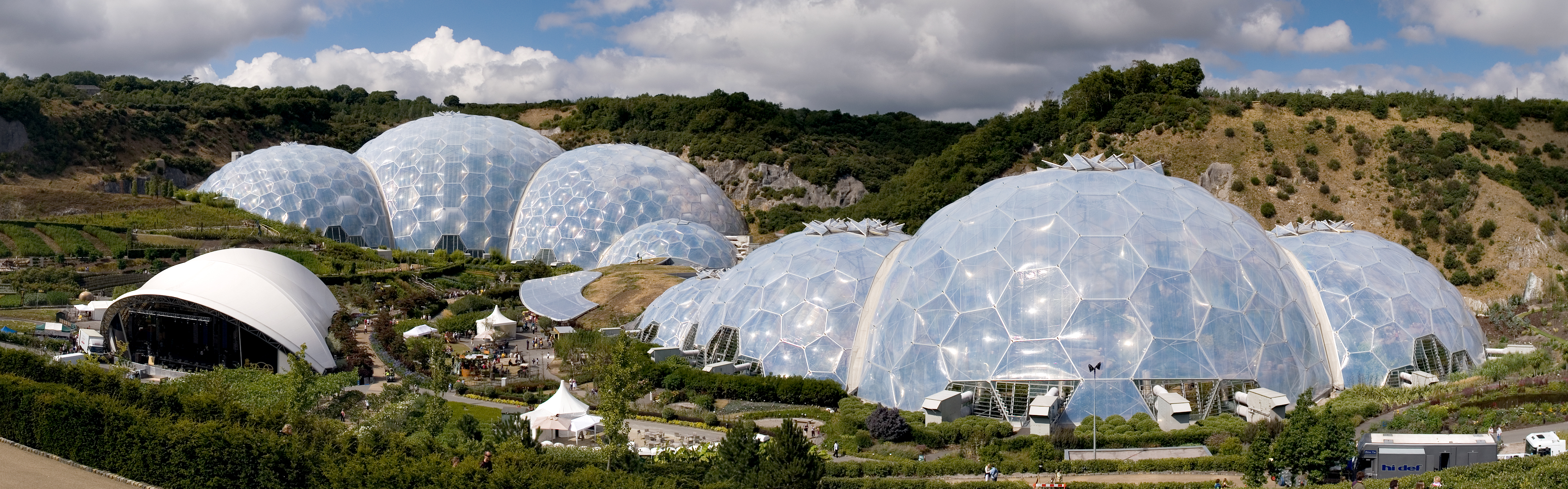
Size of this preview: 800 × 250 pixels. Other resolutions: 320 × 100 pixels | 640 × 200 pixels | 1,024 × 320 pixels | 1,280 × 400 pixels | 3,700 × 1,155 pixels.



Original file (3,700 × 1,155 pixels, file size: 3.77 MB, MIME type: image/jpeg)
Urban Insect Hotel
Mathematically-inspired bug houses designed to promote urban biodiversity
by Karen Day in Design on 14 July 2010
 Winning London's recent Beyond The Hive competition, the "Insect
Hotel" is a five-star refuge for bugs living in urban environments.
Architecture firm Arup Associates designed individual compartments in a
mathematically-derived pattern known as a Voronoi tessellation to house
an array of species spanning spiders, beetles and moths.
Winning London's recent Beyond The Hive competition, the "Insect
Hotel" is a five-star refuge for bugs living in urban environments.
Architecture firm Arup Associates designed individual compartments in a
mathematically-derived pattern known as a Voronoi tessellation to house
an array of species spanning spiders, beetles and moths.Recently featured on Good, the competition was commissioned by real estate company British Land and the City of London with the goal of bringing biodiversity to cities and to celebrate the London Festival of Architecture.
http://earthtechling.com/2012/12/kinetic-tessellated-skin-to-filter-saudi-sunlight/

Assemblage type scultpure large and small; Orchid Mantis
http://www.thisiscolossal.com/page/5/?s=monumental+plant+sculptures
 These two magnificent little animal sculptures
titled Time to be Included were welded together using hundreds of tiny
used watch parts. According to Tokyobling’s Blog the works are by
Japanese sculptor Natsumi Honda from Tama Art University, but there
seems to be very little additional info about the artist online. (via
lustik)…
These two magnificent little animal sculptures
titled Time to be Included were welded together using hundreds of tiny
used watch parts. According to Tokyobling’s Blog the works are by
Japanese sculptor Natsumi Honda from Tama Art University, but there
seems to be very little additional info about the artist online. (via
lustik)…
Read more...


These two magnificent little animal sculptures titled Time to be Included were welded together using hundreds of tiny used watch parts. According to Tokyobling’s Blog the works are by Japanese sculptor Natsumi Honda from Tama Art University, but there seems to be very little additional info about the artist online. (via lustik)
https://www.youtube.com/watch?v=QdfGCscTMak#t=23
https://www.youtube.com/watch?v=Se489OWg3eU
Assemblage
Assemblage is an artistic process. In the visual arts, it consists of making three-dimensional or two-dimensional artistic compositions by putting together found objects. [1][2] In literature, assemblage refers to a text "built primarily and explicitly from existing texts in order to solve a writing or communication problem in a new context".[3] The origin of the artform dates to the cubist constructions of Pablo Picasso c. 1912-1914.[4] The origin of the word (in its artistic sense) can be traced back to the early 1950s, when Jean Dubuffet created a series of collages of butterfly wings, which he titled assemblages d'empreintes. However, both Marcel Duchamp and Pablo Picasso had been working with found objects for many years prior to Dubuffet. They were not alone. Russian artist Vladimir Tatlin creates his "counter-reliefs" in the middle of 1910s. Alongside Tatlin, the earliest woman artist to try her hand at assemblage was Elsa von Freytag-Loringhoven, the Dada Baroness. In addition, one of the earliest and most prolific was Louise Nevelson, who began creating her sculptures from found pieces of wood in the late 1930s.
In 1961, the exhibition "The Art of Assemblage" was featured at the New York Museum of Modern Art. The exhibition showcased the work of early 20th-century European artists such as Braque, Dubuffet, Marcel Duchamp, Picasso, and Kurt Schwitters alongside Americans Man Ray, Joseph Cornell, Robert Mallary and Robert Rauschenberg, and also included less well known American West Coast assemblage artists such as George Herms, Bruce Conner and Edward Kienholz. William C Seitz, the curator of the exhibition, described assemblages as being made up of preformed natural or manufactured materials, objects, or fragments not intended as art materials.[5]
Watch Part Sculptures by Natsumi HondaFebruary 9, 2012
These two magnificent little animal sculptures
titled Time to be Included were welded together using hundreds of tiny
used watch parts. According to Tokyobling’s Blog the works are by
Japanese sculptor Natsumi Honda from Tama Art University, but there
seems to be very little additional info about the artist online. (via
lustik)…Read more...
Watch Part Sculptures by Natsumi HondaFebruary 9, 2012
These two magnificent little animal sculptures titled Time to be Included were welded together using hundreds of tiny used watch parts. According to Tokyobling’s Blog the works are by Japanese sculptor Natsumi Honda from Tama Art University, but there seems to be very little additional info about the artist online. (via lustik)
https://www.youtube.com/watch?v=QdfGCscTMak#t=23
https://www.youtube.com/watch?v=Se489OWg3eU
Elsa von Freytag-Loringhoven
Elsa von Freytag-Loringhoven (1874–1927) was an artist and poet in Berlin, Munich, New York, and Paris.
Titles by This Author
Assemblage
Assemblage is an artistic process. In the visual arts, it consists of making three-dimensional or two-dimensional artistic compositions by putting together found objects. [1][2] In literature, assemblage refers to a text "built primarily and explicitly from existing texts in order to solve a writing or communication problem in a new context".[3] The origin of the artform dates to the cubist constructions of Pablo Picasso c. 1912-1914.[4] The origin of the word (in its artistic sense) can be traced back to the early 1950s, when Jean Dubuffet created a series of collages of butterfly wings, which he titled assemblages d'empreintes. However, both Marcel Duchamp and Pablo Picasso had been working with found objects for many years prior to Dubuffet. They were not alone. Russian artist Vladimir Tatlin creates his "counter-reliefs" in the middle of 1910s. Alongside Tatlin, the earliest woman artist to try her hand at assemblage was Elsa von Freytag-Loringhoven, the Dada Baroness. In addition, one of the earliest and most prolific was Louise Nevelson, who began creating her sculptures from found pieces of wood in the late 1930s.
In 1961, the exhibition "The Art of Assemblage" was featured at the New York Museum of Modern Art. The exhibition showcased the work of early 20th-century European artists such as Braque, Dubuffet, Marcel Duchamp, Picasso, and Kurt Schwitters alongside Americans Man Ray, Joseph Cornell, Robert Mallary and Robert Rauschenberg, and also included less well known American West Coast assemblage artists such as George Herms, Bruce Conner and Edward Kienholz. William C Seitz, the curator of the exhibition, described assemblages as being made up of preformed natural or manufactured materials, objects, or fragments not intended as art materials.[5]
Artists primarily known for assemblage
- Arman (1928–2007), French artist, sculptor and painter.
- Hans Bellmer (1902–1975), a German artist known for his life-sized female dolls, produced in the 1930s.
- Wallace Berman (1926–1976), an American artist known for his verifax collages.
- André Breton (1896–1966), a French artist, regarded as a principal founder of Surrealism.
- John Chamberlain (1927-2011), a Chicago artist known for his sculptures of welded pieces of wrecked automobiles.
- Greg Colson (born 1956), an American artist known for his wall sculptures of stick maps, constructed paintings, solar systems, directionals, and intersections.
- Joseph Cornell (1903–1972). Cornell, who lived in New York City, is known for his delicate boxes, usually glass-fronted, in which he arranged surprising collections of objects, images of renaissance paintings and old photographs. Many of his boxes, such as the famous Medici Slot Machine boxes, are interactive and are meant to be handled.[6]
- Rosalie Gascoigne (1917–1999), a New Zealand sculptor.
- Raoul Hausmann (1886–1971), an Austrian artist and writer and a key figure in Berlin Dada, his most famous work is the assemblage Der Geist Unserer Zeit - Mechanischer Kopf (Mechanical Head [The Spirit of Our Age]), c. 1920.
- Romauald Hazoumé (born 1962), a contemporary artist from the Republic of Bénin, who exhibits widely in Europe and the U.K.
- George Herms (born 1935), an American artist known for his assemblages, works on papers, and theater pieces.
- Robert H. Hudson (born 1938), an American artist.
- Edward Kienholz (1927–1994), an American artist who collaborated with his wife, Nancy Reddin Kienholz, creating free-standing, large-scale "tableaux" or scenes of modern life such as the Beanery, complete with models of persons, made of discarded objects.[7]
- Jean-Jacques Lebel (born 1936), in 1994 installed a large assemblage entitled Monument à Félix Guattari in the Forum of the Centre Pompidou.
- Janice Lowry (1946-2009), American artist known for biographical art in the form of assemblage, artist books, and journals, which combined found objects and materials with writings and sketches.[8]
- Ondrej Mares (1949–2008), a Czech-Australian artist and sculptor best known for his 'Kachina' figures - a series of works.[9]
- Louise Nevelson (1899–1988), an American artist, known for her abstract expressionist “boxes” grouped together to form a new creation. She used found objects or everyday discarded things in her “assemblages” or assemblies, one of which was three stories high.[10]
- Minoru Ohira (born 1950), a Japanese-born artist.
- Meret Oppenheim (1913–1985), a German-born Swiss artist, identified with the Surrealist movement.
- Robert Rauschenberg (1925–2008), painter and collagist known for his mixed media works during six decades.
- Betye Saar (born 1926), American visual artist primarily known for her assemblages with family memorabilia, stereotyped African American figures from folk culture and advertising, mystical amulets and charms, and ritual and tribal objects.
- Fred H. Roster (born 1944), an American sculptor.
- Daniel Spoerri (born 1930), a Swiss artist, known for his "snare pictures" in which he captures a group of objects, such as the remains of meals eaten by individuals, including the plates, silverware and glasses, all of which are fixed to the table or board, which is then displayed on a wall.[11]
- Vladimir Tatlin (1885–1953), a Russian artist known for his counter-reliefs — structures made of wood and iron for hanging in wall corners in the 1910s.
- Wolf Vostell (1932–1998), known for his use of concrete in his work. In his environments video installations and paintings he used television sets and concrete as well as telephones real cars and pieces of cars.
- Jeff Wassmann (born 1958), an American-born contemporary artist who works in Australia under the nom de plume of the pioneering German modernist Johann Dieter Wassmann (1841–1898).[12]
- H. C. Westermann (1922–1981), an American sculptor and printmaker.
See also
References
- Walker, John. (1992) "Assemblage Art". Glossary of Art, Architecture & Design since 1945, 3rd. ed. Retrieved February 7, 2012.
- About.com art history Retrieved March 30, 2011
- Selber and Johnson-Eilola, Plagiarism, Originality, Assemblage, Computers and Composition, Vol. 24, No. 4. (2007), pp. 375-403
- The Guitar, MoMA
- William C. Seitz, The Art of Assemblage, Doubleday (1962)
- Deborah Solomon, Utopia Parkway: The Life and Work of Joseph Cornell, New York: Farrar, Straus & Giroux (1997).
- Kienholz: 11 + 11 Tableaux, Moderna Museet, Stockholm, Sweden, n.d.
- http://www.aaa.si.edu/collections/janice-lowry-papers-13665
- Galerie Gambit Pamphlet, Drury, Richard. (2000)
- Biographical Note, The Louise Nevelson Papers, Archives of American Art, Smithsonian Institution.
- Wieland Schmied and Daniel Spoerri, Daniel Spoerri: Coincidence as Master = Le Hasard comme maître = Der Zufall als Meister = Il caso come maestro, Bielefeld, Germany, 2003 at p. 10.
- Ashley Crawford, Hoax most perfect, Melbourne Age, October 11, 2003 [1]
Further reading
- William C. Seitz: The Art of Assemblage. Exhib. October 4 - November 12, 1961, The Museum of Modern Art, New York, 1961.
- Stephan Geiger: The Art of Assemblage. The Museum of Modern Art, 1961. Die neue Realität der Kunst in den frühen sechziger Jahren, (Dissertation Universität Bonn 2005), München 2008, ISBN 978-3-88960-098-1
- Sophie Dannenmüller: "Un point de vue géographique: l'assemblage en Californie", in L'art de l'assemblage. Relectures, sous la direction de Stéphanie Jamet-Chavigny et Françoise Levaillant. Presses universitaires de Rennes, collection "Art & société", Rennes, 2011.
- Sophie Dannenmüller: "L'assemblage en Californie: une esthétique de subversion", in La Fonction critique de l'art, Dynamiques et ambiguïtés, sous la direction de Evelyne Toussaint, Les éditions de La Lettre volée / Essais, Bruxelles, 2009.
- Sophie Dannenmüller: "Bruce Conner et les Rats de l'Art", Les Cahiers du Musée national d'art moderne, Editions du Centre Pompidou, Paris, n° 107, avril 2009, p. 52-75.
- Tatlin, Vladimir Evgrafovich "Counter-relief (Material Assortment)" - http://www.tretyakovgallery.ru/en/collection/_show/image/_id/361
free form dome
http://www.geometrica.com/en/free-form-dome-for-emission-control/?REF#.U0CKmV7ZkzU
The large arched vault had its drawbacks. Bending stresses were very large. It would have required increased truss depth and structural members that would have been too heavy. Clearances for access and interior space would be compromised. This vaulted shape meant that some of the existing equipment would have to be modified or have to remain uncovered. Equipment modifications were undesirable as they would require plant downtime.

Custom Solution Required
The initial concept consisted of two smaller domes and a huge arched vault for the facility's largest area. Local suppliers were consulted, but the spans for the big area were simply too large and complex. As a result, the project architect, Percy Diaz, contacted Geometrica for a proposal. The Geometrica team traveled to the site and met with the plant operators.The large arched vault had its drawbacks. Bending stresses were very large. It would have required increased truss depth and structural members that would have been too heavy. Clearances for access and interior space would be compromised. This vaulted shape meant that some of the existing equipment would have to be modified or have to remain uncovered. Equipment modifications were undesirable as they would require plant downtime.
Saturday, 5 April 2014
futuro at Saint Ouen
In what is probably the definitive reference document on the history of
the Futuro House "Futuro - Tomorrow's House from Yesterday By Marko Home
and Mika Taanila" guest contributor Paul McNeil writes [page 123
refers] that with a promising looking future Futuro Homes NZ Ltd. had
plans to open a second factory on the North Island by 1977. There are no
further details but perhaps this plan involved Orbital Homes Ltd. [then
Thames Homes Ltd.].
- See more at:
http://www.thefuturohouse.com/Futuro-House-Lost-Locations.html#sthash.8iag2kc9.dpuf
In what is probably the definitive reference document on the history of
the Futuro House "Futuro - Tomorrow's House from Yesterday By Marko Home
and Mika Taanila" guest contributor Paul McNeil writes [page 123
refers] that with a promising looking future Futuro Homes NZ Ltd. had
plans to open a second factory on the North Island by 1977. There are no
further details but perhaps this plan involved Orbital Homes Ltd. [then
Thames Homes Ltd.].
- See more at:
http://www.thefuturohouse.com/Futuro-House-Lost-Locations.html#sthash.8iag2kc9.dpuf
https://www.youtube.com/watch?v=UwGTnY_MLjU
https://www.youtube.com/watch?v=HZNbZs2bcgA
abandonned futuro
In what is probably the definitive reference document on the history of
the Futuro House "Futuro - Tomorrow's House from Yesterday By Marko Home
and Mika Taanila" guest contributor Paul McNeil writes [page 123
refers] that with a promising looking future Futuro Homes NZ Ltd. had
plans to open a second factory on the North Island by 1977. There are no
further details but perhaps this plan involved Orbital Homes Ltd. [then
Thames Homes Ltd.].
- See more at:
http://www.thefuturohouse.com/Futuro-House-Lost-Locations.html#sthash.8iag2kc9.dpuf
In
a blog post dated 052306 The Tomahawk Kid provides some historical
information about the Futuro though still no indication of its current
whereabouts.
The Tomahawk Kid indicates that on a visit to Thames he tracked down the
original owner of the Thames Futuro [one of the original Futuro
franchise owners in New Zealand]. The Futuro had at some point been
traded to a man named Mike Peti. Apparently the trade included the
original moulds used during manufacture. In a subsequent sale the Futuro
[and presumably the moulds also] became the property of one Mike Zero,
owner of a [now defunct as far as I can establish] shop called "Hunters
and Collectors" in Auckland. Rumor has it that at some point Zero lost
everything he had, including the Futuro, because of a drug problem. The
Tomahawk Kid adds that the current owner of the Futuro lives in Auckland
but provides no further information.
In his post The Tomahawk Kid also writes that New Zealand Futuros were
manufactured in Christchurch by Orbital Homes Ltd. Opencorporates.com
indicates that this company was incorporated [as Thames Homes Ltd. see
Certificate of Incorporation here] in 1967 and dissolved in 2001. Over
the course of its life the company traded under the names Thames Homes
Ltd. [1967 to 1971], Peninsular Builders Ltd. [1971 to 1996] and finally
Orbital Homes Ltd. until it was dissolved.
Shareholders and directors of the company were Stewart Graham Harris of
Thames, New Zealand and Ashley Gavin Harris of Mission Viejo, CA, USA.
Interestingly in among a series of documents available from the New
Zealand Companies Office website [access the documents as a PDF file
here] it appears that in 1999 the s - See more at:
http://www.thefuturohouse.com/Futuro-House-Lost-Locations.html#sthash.8iag2kc9.dpuf
In
a blog post dated 052306 The Tomahawk Kid provides some historical
information about the Futuro though still no indication of its current
whereabouts.
The Tomahawk Kid indicates that on a visit to Thames he tracked down the
original owner of the Thames Futuro [one of the original Futuro
franchise owners in New Zealand]. The Futuro had at some point been
traded to a man named Mike Peti. Apparently the trade included the
original moulds used during manufacture. In a subsequent sale the Futuro
[and presumably the moulds also] became the property of one Mike Zero,
owner of a [now defunct as far as I can establish] shop called "Hunters
and Collectors" in Auckland. Rumor has it that at some point Zero lost
everything he had, including the Futuro, because of a drug problem. The
Tomahawk Kid adds that the current owner of the Futuro lives in Auckland
but provides no further information.
In his post The Tomahawk Kid also writes that New Zealand Futuros were
manufactured in Christchurch by Orbital Homes Ltd. Opencorporates.com
indicates that this company was incorporated [as Thames Homes Ltd. see
Certificate of Incorporation here] in 1967 and dissolved in 2001. Over
the course of its life the company traded under the names Thames Homes
Ltd. [1967 to 1971], Peninsular Builders Ltd. [1971 to 1996] and finally
Orbital Homes Ltd. until it was dissolved.
Shareholders and directors of the company were Stewart Graham Harris of
Thames, New Zealand and Ashley Gavin Harris of Mission Viejo, CA, USA.
Interestingly in among a series of documents available from the New
Zealand Companies Office website [access the documents as a PDF file
here] it appears that in 1999 the s - See more at:
http://www.thefuturohouse.com/Futuro-House-Lost-Locations.html#sthash.8iag2kc9.dpuf
In
a blog post dated 052306 The Tomahawk Kid provides some historical
information about the Futuro though still no indication of its current
whereabouts.
The Tomahawk Kid indicates that on a visit to Thames he tracked down the
original owner of the Thames Futuro [one of the original Futuro
franchise owners in New Zealand]. The Futuro had at some point been
traded to a man named Mike Peti. Apparently the trade included the
original moulds used during manufacture. In a subsequent sale the Futuro
[and presumably the moulds also] became the property of one Mike Zero,
owner of a [now defunct as far as I can establish] shop called "Hunters
and Collectors" in Auckland. Rumor has it that at some point Zero lost
everything he had, including the Futuro, because of a drug problem. The
Tomahawk Kid adds that the current owner of the Futuro lives in Auckland
but provides no further information.
In his post The Tomahawk Kid also writes that New Zealand Futuros were
manufactured in Christchurch by Orbital Homes Ltd. Opencorporates.com
indicates that this company was incorporated [as Thames Homes Ltd. see
Certificate of Incorporation here] in 1967 and dissolved in 2001. Over
the course of its life the company traded under the names Thames Homes
Ltd. [1967 to 1971], Peninsular Builders Ltd. [1971 to 1996] and finally
Orbital Homes Ltd. until it was dissolved.
Shareholders and directors of the company were Stewart Graham Harris of
Thames, New Zealand and Ashley Gavin Harris of Mission Viejo, CA, USA.
Interestingly in among a series of documents available from the New
Zealand Companies Office website [access the documents as a PDF file
here] it appears that in 1999 the s - See more at:
http://www.thefuturohouse.com/Futuro-House-Lost-Locations.html#sthash.8iag2kc9.dpuf
futuro at Saint Ouen
http://www.thefuturohouse.com/Futuro-Saint-Ouen-France.html


<iframe width="420" height="315" src="//www.youtube.com/embed/UwGTnY_MLjU" frameborder="0" allowfullscreen></iframe>

Subscribe to:
Posts (Atom)